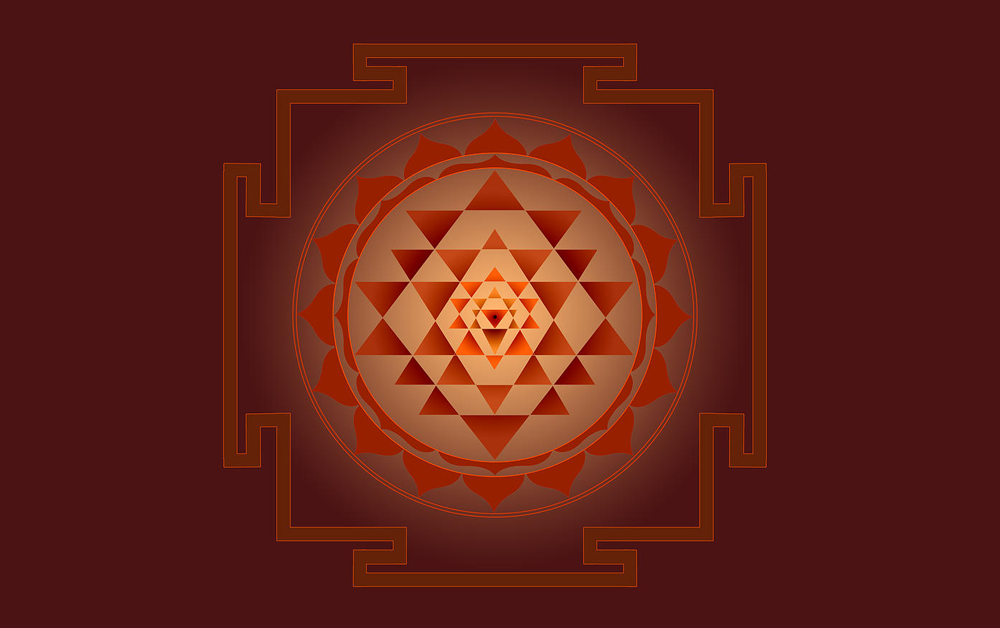

Lalita Sahasranama, the celebrated hymn of the thousand names of the Divine Mother, is at once a devotional recitation, a map of Sri Vidya theology, and a guide to contemplation. Its names praise the Mother as beautiful and compassionate, as the sovereign power of the universe, and as pure consciousness itself. This first article in a three-part introduction explores where the hymn is traditionally situated, how it is transmitted, and how a new reader can approach it with reverence.
What does Lalita Sahasranama mean?
Lalita is a name of the Divine Mother, often understood as the graceful, beautiful, or playful one. She is also addressed as Lalitambika, Rajarajeshwari, and Maha Tripurasundari. Sahasranama means "a thousand names," while stotra means a hymn of praise. Lalita Sahasranama Stotra is therefore a hymn that contemplates the Divine Mother through one thousand sacred names.
The names do more than list attributes. Together they move through many levels of understanding: the Mother's form, qualities, cosmic activity, sacred dwelling, mantra, Sri Chakra, subtle energy, philosophical identity, and final transcendence. A devotee may encounter the hymn first as prayer, while a student of Sri Vidya may recognize a carefully ordered spiritual teaching.
The traditional setting in the Brahmanda Purana
Tradition places Lalita Sahasranama within the Lalitopakhyana, a narrative associated with the Brahmanda Purana. In this account, the hymn is revealed in a dialogue between Hayagriva and the sage Agastya. Hayagriva, revered as a form of Vishnu and as a teacher of sacred knowledge, instructs Agastya in the worship of the Divine Mother.
The hymn itself is traditionally attributed to the eight Vagdevatas, goddesses of sacred speech led by Vasini. They compose the thousand names at Lalita's command and offer them in a divine assembly. This origin is important to the tradition: the names are not treated as arbitrary descriptions written from outside, but as sacred speech arising through the Mother's own power.
Why is the hymn considered distinctive?
Lalita Sahasranama is admired for its flowing composition and the breadth of its subject. Traditional commentators observe that its thousand names are not simply repeated to complete a numerical count. The sequence covers the Mother's visible and subtle forms, her cosmic sovereignty, the story of Bhandasura, the inner and outer dimensions of Sri Chakra worship, and the non-dual insights of the Upanishads.
The hymn can consequently speak to different temperaments. A devotional reader may dwell on names that express compassion, protection, and auspiciousness. A contemplative reader may focus on names that identify Lalita with consciousness. A practitioner within an initiated lineage may understand additional references to mantra, nyasa, mudra, and Navavarana worship.
What does "secret" mean in this tradition?
The text is frequently described as rahasya, or secret. This does not merely mean concealed information. It points to knowledge whose meaning becomes clear through preparation, disciplined practice, and inner maturity. The source text presents three ways of understanding the Mother: a form that can be visualized and worshipped, a subtle presence expressed through mantra, and the supreme reality of pure consciousness.
Sri Vidya lineages have therefore preserved careful rules around initiatory mantras and specialized ritual practices. Those elements should be learned from a qualified guru rather than reconstructed from fragments found online. At the same time, many teachers distinguish lineage-specific ritual from sincere devotional recitation of the stotra. Customs differ, so a practitioner should respect family tradition, local practice, and the guidance of a trusted teacher.
Recitation, worship, and contemplation
In formal Sri Vidya practice, recitation may be joined with Sri Chakra puja, mantra japa, flower offering, or lamp worship. The thousand names can also be rendered as a namavali, with each name used individually in worship. These are established forms of practice, but they are not the only way a beginner can engage with the hymn.
A simple approach is to listen attentively, learn accurate pronunciation gradually, and reflect on a small number of names. Understanding can deepen recitation, but complete intellectual mastery is not a prerequisite for devotion. The essential qualities emphasized by the tradition are steadiness, humility, faith, and an intention directed toward the Divine Mother.
The six movements of praise
Classical discussions of stotra literature identify six functions of a complete hymn: reverent salutation, blessing, spiritual teaching, celebration of divine power, proclamation of glory, and prayer. Lalita Sahasranama contains all six.
- Names such as Mahapujya present the Mother as worthy of supreme worship.
- Names such as Shubhakari celebrate her as the source of auspiciousness.
- Atmavidya and Brahmatmaikya-svarupini point toward knowledge of the Self and the unity of Atman and Brahman.
- Names connected with the defeat of Bhandasura celebrate divine power overcoming disorder.
- Dayamurti, Rakshakari, and Bhayapaha allow the devotee to approach her as compassion, protection, and freedom from fear.
This range explains why the hymn is not confined to one emotional mood. It can begin in reverence, mature into inquiry, and culminate in contemplation of the one reality present in worshipper, worship, and worshipped.
A responsible beginning
For a newcomer, consistency is more useful than ambition. Begin with a reliable recording or a carefully edited text. Learn in short sections, avoid guessing at damaged OCR spellings, and set aside a clean, quiet time for recitation. If you belong to a living tradition, follow its instructions. If you do not, remain with open devotional practices and seek guidance before undertaking initiatory mantras or complex Sri Chakra rituals.
The first name, Sri Mata, offers a complete point of entry: the Supreme is approached as Mother, the source, support, and final resting place of all beings. The next part of this series follows that name into the imagery of Sri Chakra and the practice of inner worship.
Continue the series
Primary reference: Sri Lalita Sahasranama Stotram - An Insight by Swami Shantananda Puri.